
Kallee Marshall (She/Her), Registered Provisional Psychologist, Registered Dietitian
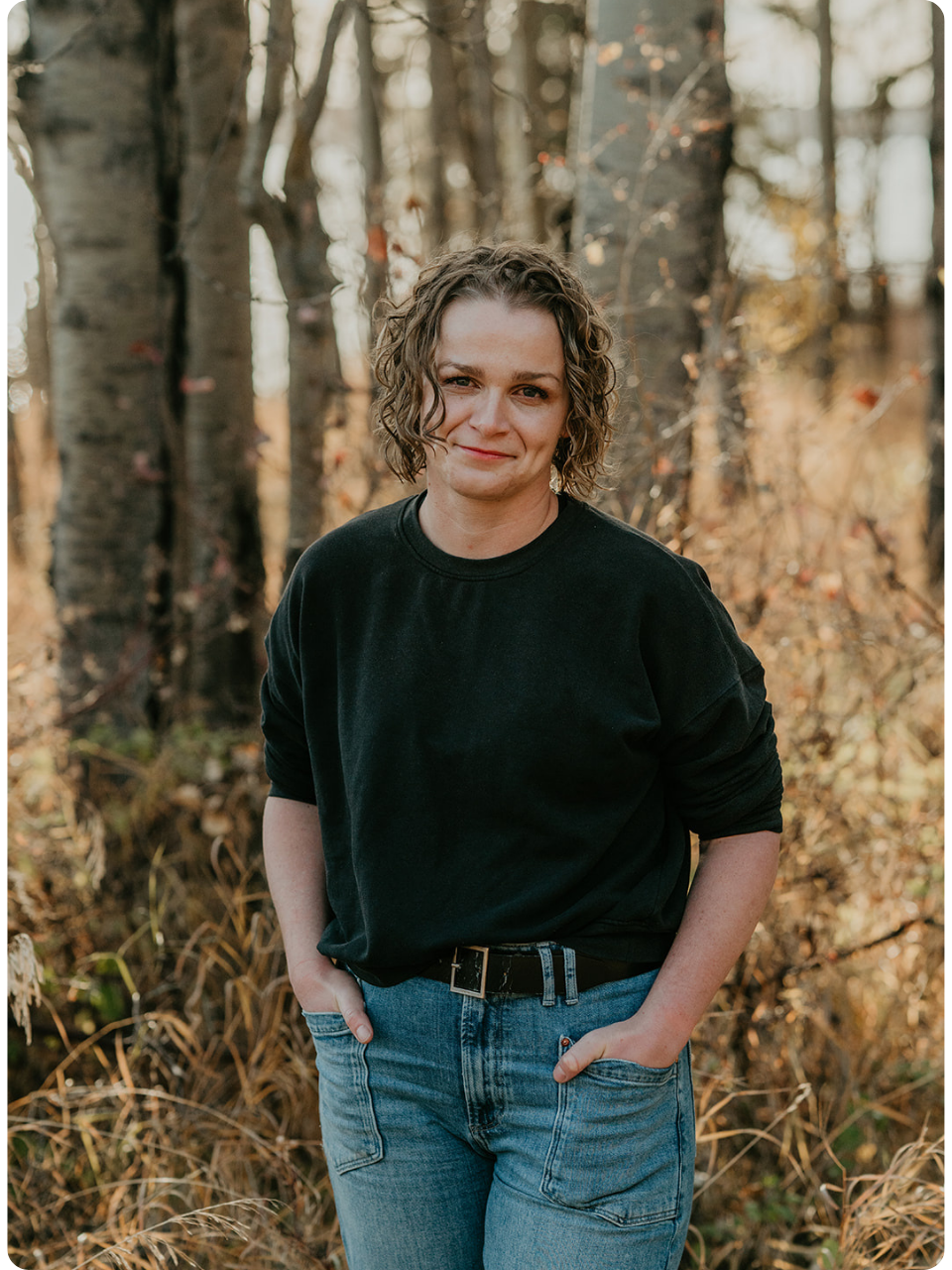
Nutrition & Psychotherapy
Distressing emotions like sadness, pain, and anger are an important part of being human. And yet, to feel and express these feelings can make us 'weak’ and ‘inferior’ compared to others who are able to ‘focus on the positive’ and not let things bother them. To be well, we need to make room for and accept these distressing emotions. We need to feel our feelings to transform our stuck and unhealthy emotions (e.g., feeling inadequate, unworthy, or alone and afraid). In yet, as women we are encouraged to be small, to be good, to be pretty and perfect and to prioritize our relationships and the feelings of others above all else.
As a woman, it's really important to me to create a safe space where women are allowed to be mad, sad, or in pain, as I want you and your pain to matter. My goal is to help you trust yourself, but to do that you need to have a strong relationship with yourself and your uncomfortable emotions (like pain, anger, sadness and hurt). As these emotions (when healthy) are packed with information on how safe we feel, what we need, want and value, they can even motivate us to act in a way that helps us get our needs met. As we navigate these uncomfortable emotions, it will be important to distinguish the difference between feeling bad because you did something that wasn't aligned with your values from feeling bad because of social conditioning.
My goal is to help you have a better relationship with yourself so that you can choose to live a life that is most authentic to you. A life where you matter and your pain is heard and understood.
I am also a Registered Dietitian who has ADHD and a long history of navigating chronic pain. At the age of 13, I started getting headaches daily. I didn’t understand my symptoms well at the time, nor did I have the right language to describe my symptoms. My journey with chronic pain, gut issues, sensory issues, and muscle issues was long. I lived in pain daily for 21 years, trying every treatment or self-management strategy suggested. My attempts to manage my symptoms with exercise, stress management, dietary changes, stretching and physiotherapy were necessary to avoid a flare-up, but they were ineffective at providing relief.
In my Master of Counselling, I learned about ADHD in detail and I realized that many the physical symptoms I experienced occurred at higher rates than normal for people with ADHD. While I had previously wondered if I had ADHD, I was always able to talk myself out of it. Learning more about ADHD and how it shows up for women, I thought I should get assessed.
In the process of getting diagnosed and treated for ADHD, many of my symptoms improved and I gained new language to describe my symptoms. This new language for my symptoms enhanced my ability to find information about the symptoms that I experienced that were previously unexplainable. For these reasons, I am passionate about sharing my lived experience and the knowledge I've learned along the way.
In the midst of my journey with pain. My physical symptoms were so overpowering that I was open to exploring my inner discomfort as a people pleaser. It was in my journey to become more assertive that I realized how difficult it is for women to set boundaries in their relationships.
As a Registered Dietitian and a Registered Provisional Psychologist, I provide a service that offers a more comprehensive approach to wellness, highlighting how diet can support your mental health and vice versa for ADHD, anxiety, depression and chronic pain.
Contact Info
Email: info@kalleemarshall.com
Website: kalleemarshall.com
Instagram: @nutritionandpsychotherapy
Phone: (587) 674 - 4100
Additional Services
Nutrition counselling for ADHD
Nutrition counselling for chronic pain
Nutrition & psychology for a comprehensive approach to mental wellness
Virtual webinars on ADHD & chronic pain
Group Therapy for women on becoming more assertive
Virtual webinars on nutrition for ADHD
Availability:
Mondays: 3 PM - 6 PM
Tuesdays: 11 AM -3 PM
Wednesdays: 1 PM - 5 PM
Thursdays: 2 PM - 5 PM
Fridays: 11 AM - 3 PM
In-person (Red Deer) and virtual sessions are available
Areas of Practice:
Therapy: Adults (18+); Individuals
Nutrition: All ages, including children
ADHD, people pleasing, chronic pain, self-esteem, life transitions, relationship issues, loss of meaning and mattering, grief & loss
EFT, Evidence-based, Client-centered, Neurodivergent Affirming, Trauma-informed, Culturally-inclusive, and Weight inclusive care.
Personal Interests:
Outside of work, I am a bit quirky, as most people with ADHD are. I might bounce between doing nothing, eating good food, and dancing alone in front of a mirror for hours while listening to my favourite songs on repeat.
I love being near water, swimming in a lake or travelling the world. Growing up my hobbies included dance, running and water-skiing.
As an adult, I’ve been learning how to draw and play basketball (shooting hoops). My favourite adventures involve travelling, being active and eating delicious food (that I don’t have to prepare).
